
The Short Answer: Yes, They’re Prone to It
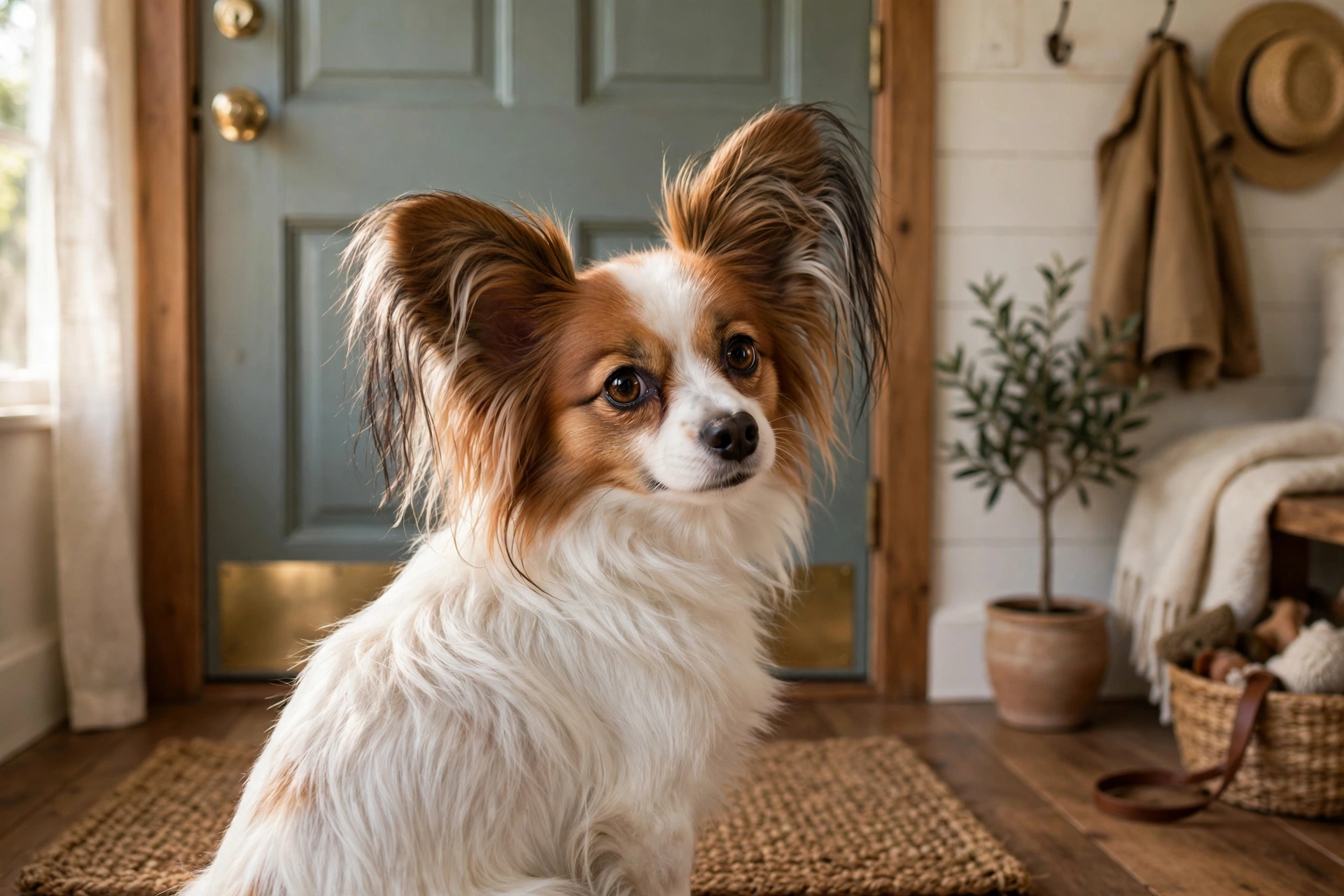
Here’s the honest truth: papillons are among the breeds most likely to struggle when left alone. Bred for centuries as close companion dogs — literally lapdogs of European royalty — they bond fiercely with their people and have a famously low tolerance for solitude. Owners call them “velcro dogs” for a reason.
That doesn’t mean every papillon will develop full-blown separation anxiety. But it does mean this is a breed where you should plan for it, watch for it early, and train for it from day one.
Why Papillons Struggle With Being Alone
It comes down to what the breed was made for. Papillons weren’t developed to guard, herd, or hunt independently — they were developed to be with people, all day, every day. That history shows up as three traits that combine into separation trouble:
- Fierce attachment: your papillon’s favorite place in the world is touching you.
- High alertness: they notice everything — including the tiny routine cues that mean you’re about to leave.
- Quick learning: they learn your departure patterns fast, which means anxiety can build before you’ve even picked up your keys.
This isn’t a training failure. It’s temperament. The goal isn’t to change who your papillon is — it’s to teach them that alone time is safe.
7 Signs Your Papillon Has Separation Anxiety
True separation anxiety shows up as distress behavior tied to your absence — usually starting within minutes of you leaving. Watch for:
- Barking, howling, or whining that begins shortly after you walk out (your neighbors may report this one)
- Scratching or chewing at doors and windows — especially exits
- House soiling in a dog who’s otherwise fully house-trained
- Frantic escape attempts from a crate or room, sometimes scraping paws or breaking nails
- Pacing, panting, or drooling when alone
- Pre-departure panic — shaking, restlessness, or shadowing you the moment you grab your shoes or keys
- Velcro behavior at home — a dog who can’t let you out of sight even when you’re there is often showing the early form, not just affection
Separation Anxiety vs. Plain Boredom
Not every chewed shoe is anxiety. A bored papillon destroys things for fun; an anxious papillon destroys things in panic — usually focused on exits, paired with vocalizing and distress signals. If the behavior only happens when you’re gone and comes with barking, drooling, or escape attempts, you’re looking at anxiety, not mischief.
6 Ways to Help Your Papillon Feel Safe Alone
1. Start with a vet check
Some medical issues mimic anxiety — urinary problems can cause accidents, and pain or cognitive decline in seniors can look like new distress. Rule those out first. A clean bill of health means you’re training the right problem.
2. Practice tiny departures
Leave for 30 seconds. Then a minute. Then five. Build up slowly over days and weeks, always staying under your dog’s panic threshold. If they panic, you went too fast — drop back down. The goal is a hundred boring, uneventful departures.
3. Make arrivals and departures boring
No long emotional goodbyes, no big celebration when you return. Keep both as low-key as possible. Big hellos teach your dog that your return is the event of the day — which makes your absence feel worse by comparison.
4. Leave a job to do
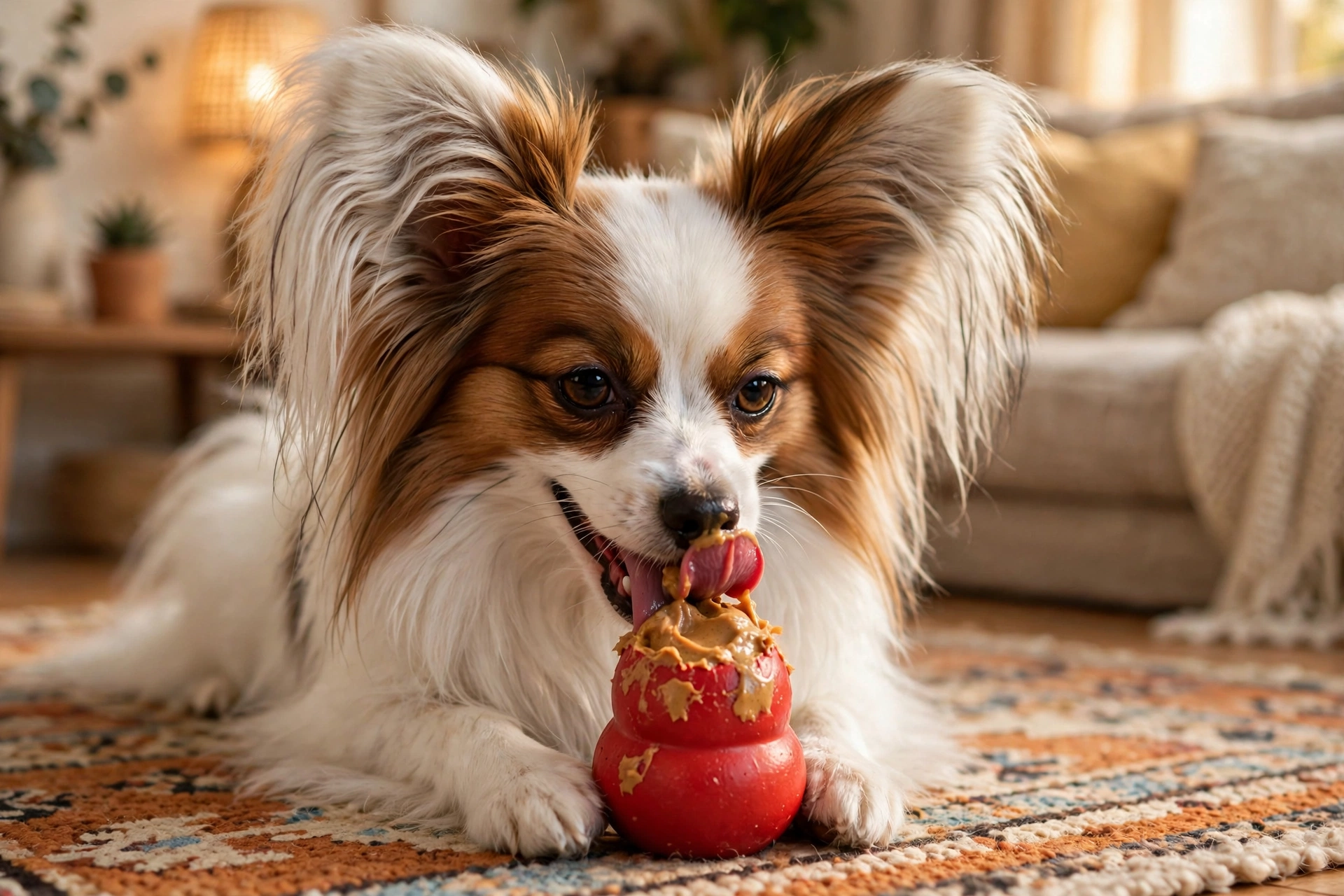
A Kong stuffed with peanut butter or a hollow bone with treats, given only when you leave, turns your departure into the start of something good. (Some anxious dogs won’t eat while alone — that’s useful information about severity, not a failure.)
5. Build independence while you’re home
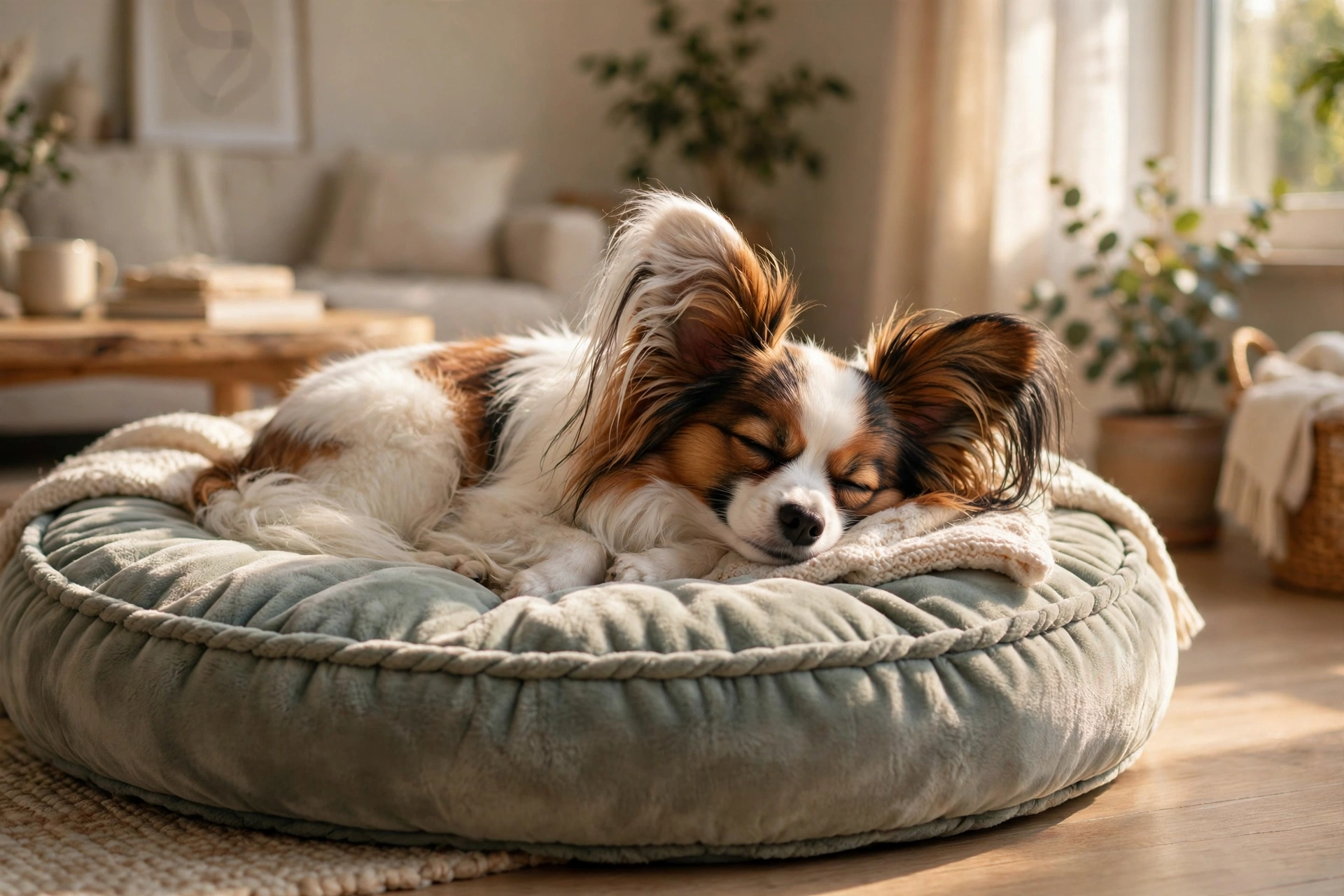
Discourage round-the-clock shadowing. Reward your papillon for settling on their own bed instead of your lap, even when you’re right there. A dog who can relax a few feet away from you is learning the skill they’ll need when you’re gone.
6. Keep a steady routine
Same walk times, same feeding times, same departure cues. Predictability is calming for anxious dogs. Abrupt schedule changes are one of the most common triggers for new separation problems.
When to Call Your Vet
Get professional help if your papillon is injuring themselves (broken nails, scraped paws, chewed skin), refusing food for entire absences, or stuck in panic after weeks of steady training. Also see your vet if the behavior appeared suddenly in a previously settled adult — pain and illness can masquerade as new anxiety. Medication combined with training helps many dogs, and there’s no shame in it.
Separation Anxiety FAQ
How long can a papillon be left alone?
Most adult papillons handle 4–6 hours fine once trained, with a midday break ideal for longer days. Puppies need much shorter stretches. Eight-plus hours alone daily is a lot to ask of this breed.
Will getting a second dog help?
Sometimes, but it’s not a cure — and occasionally you end up with two anxious dogs. Fix the anxiety first; add a companion because you want one, not as a treatment plan.
Do calming treats or music actually work?
They can take the edge off mild cases, but they’re supporting players, not the fix. Training is the main event.
Should I crate my papillon when I leave?
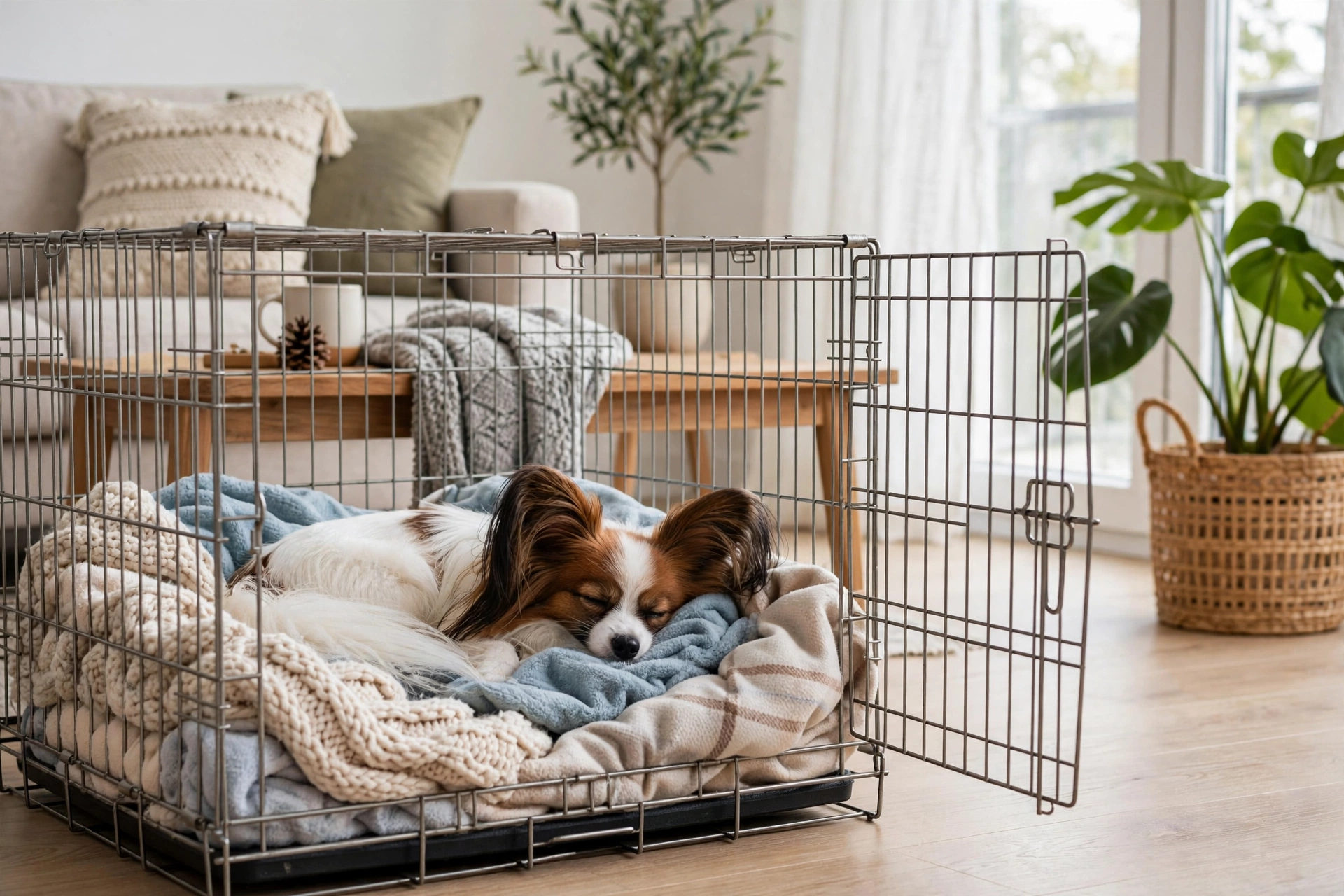
Only if the crate is already a happy place. A panicking dog can injure itself trying to escape a crate, so never use confinement as the solution — build the positive association first, then use it as a cozy den.
The Bottom Line
Papillons love their people with their whole tiny hearts — and that devotion has a flip side. Expect some separation sensitivity, start training early, keep departures boring, and don’t hesitate to loop in your vet. A papillon who learns that alone time is safe is a happier dog, and you’ll come home to a calm companion instead of a crime scene.
Thoughts from the Pack