
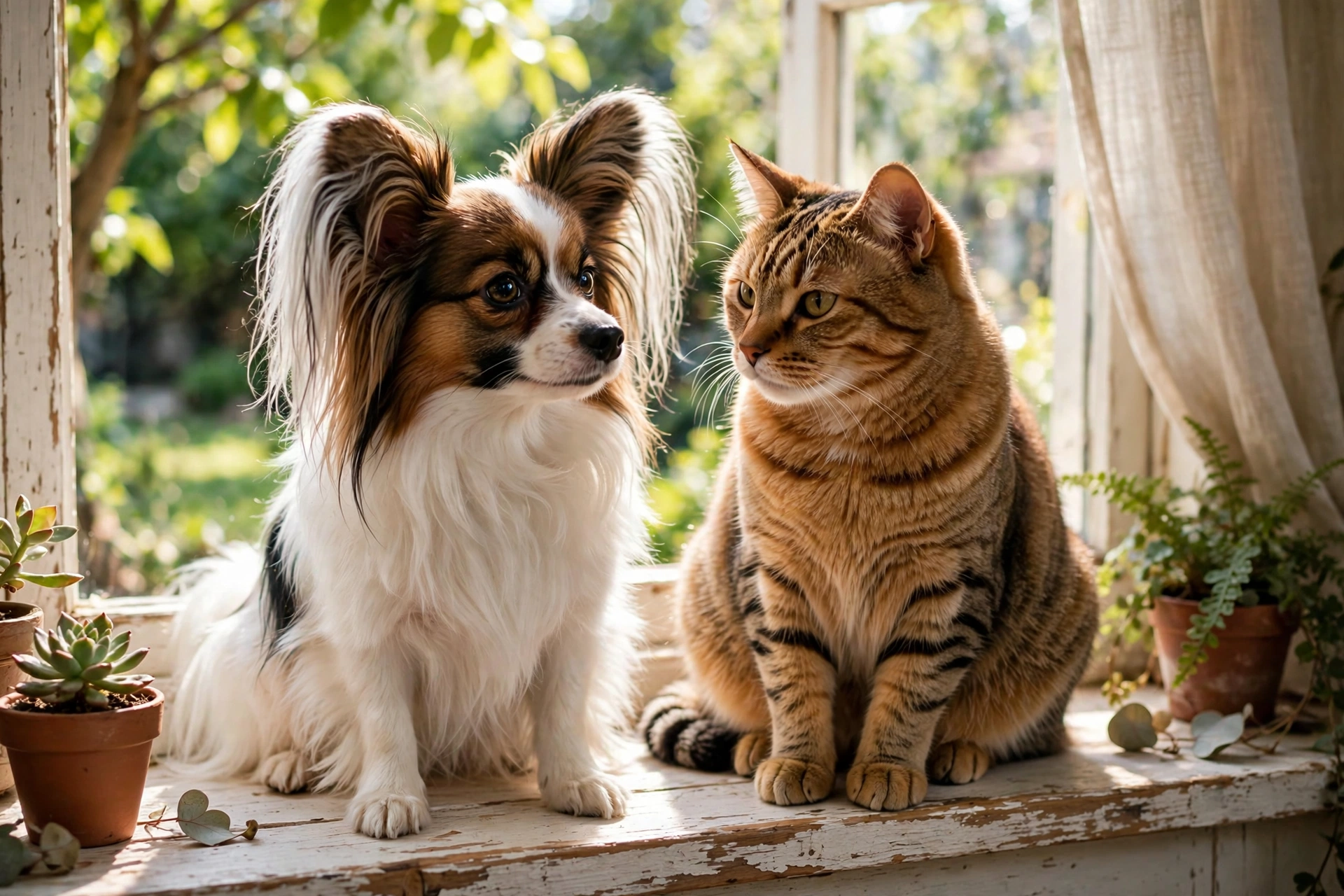
Do Papillons Get Along With Cats? The Short Answer: Usually Yes
Do papillons get along with cats? If you’re a cat person eyeing a papillon, here’s good news: papillons are consistently ranked among the most cat-friendly dog breeds, right up there with Cavalier King Charles Spaniels. They’re companion dogs, not hunters — bred to befriend, not chase. Most papillons live happily with cats, and many become genuine cuddle buddies. As always, the individual dog and the introduction matter more than the breed average.
Why Papillons and Cats Tend to Click
A few breed traits stack the deck in favor of harmony:
- Low prey drive: unlike terriers or sighthounds, papillons weren’t bred to chase and grab small animals. A running cat triggers curiosity more often than a chase instinct.
- Similar size and energy: a 7-pound papillon and a 9-pound cat are evenly matched — neither is an intimidating giant to the other.
- Social temperament: papillons are outgoing and affiliative. Raised with cats, they usually show the same enthusiasm for feline housemates as they do for people.
- Good impulse control (for a toy breed): they’re quick learners, so “leave the cat alone” is a very teachable rule.
One honest caveat: papillons can be bossy and possessive — of you, of toys, of the sunny spot. That’s the friction point to manage, not chasing.
When It Goes Wrong
The failures usually come from circumstance, not breed. Risk goes up with an unsocialized adult papillon meeting a fearful cat, a dog that was never taught to respect boundaries, or a household that skips the introduction and hopes for the best. A confident cat that stands its ground also trains a pushy papillon faster than any human can.
How to Introduce a Papillon and a Cat
1. Give the cat a sanctuary
Before the dog arrives, set up one room as 100% dog-free — door closed — with the litter box, food, water, scratching post, and a hiding spot. The cat always needs a retreat, especially in week one.
2. Separate first, no face-to-face
Keep them in different rooms for the first few days. They’ll hear and smell each other through the door, which is exactly the point: presence without pressure.
3. Swap scents
Put a blanket in each animal’s sleeping spot for a couple of days, then swap them. Let each pet investigate the other’s smell on their own terms. Hissing at the blanket is normal — it’s desensitization working.
4. Controlled first meetings
Short, leashed, calm. Let the cat approach or retreat freely — never force it. Reward the papillon for calm, disinterested behavior around the cat. End each session before anyone gets stressed.
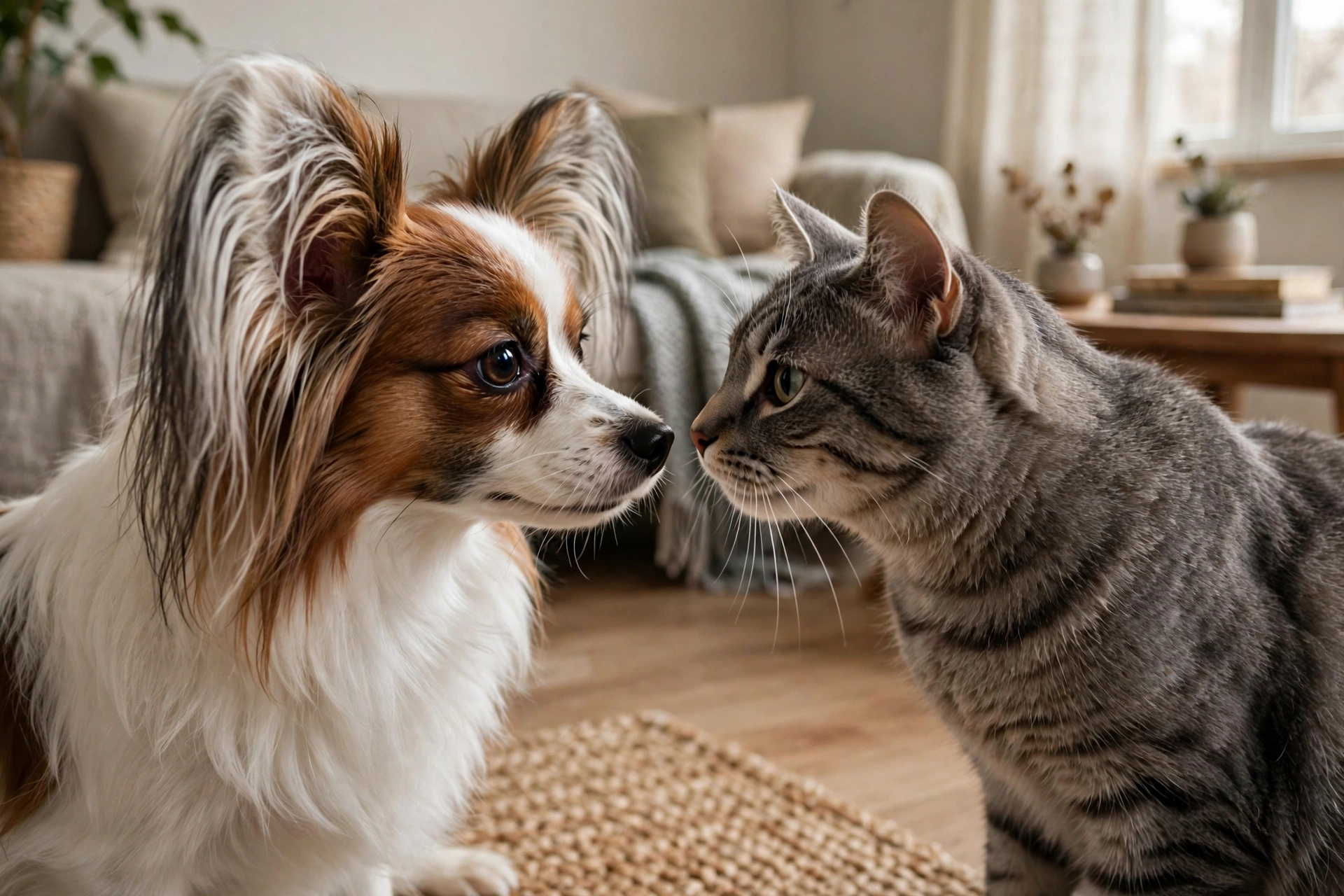
5. Supervise for weeks, not days
Don’t leave them alone together until you’re genuinely confident — that can take weeks. Most papillon-cat friendships are built slowly and then last for years. For a deeper dive on first meetings, the ASPCA guide to introducing your cat to a new dog walks through the same slow-and-steady method.
Keeping the Peace Long-Term
Feed them separately (dog food isn’t great for cats and vice versa), give the cat vertical escape routes like shelves or a tall cat tree, and keep training the papillon’s manners around the cat — no chasing, no toy-stealing, no harassing. Interestingly, a second pet often eases a papillon’s separation anxiety, so a harmonious cat can be a genuine quality-of-life upgrade for your dog. Stick with these habits, and ‘do papillons get along with cats?’ becomes a question you stop asking — because you’ll be living the yes.
Papillons and Cats FAQ
Will my papillon chase my cat?
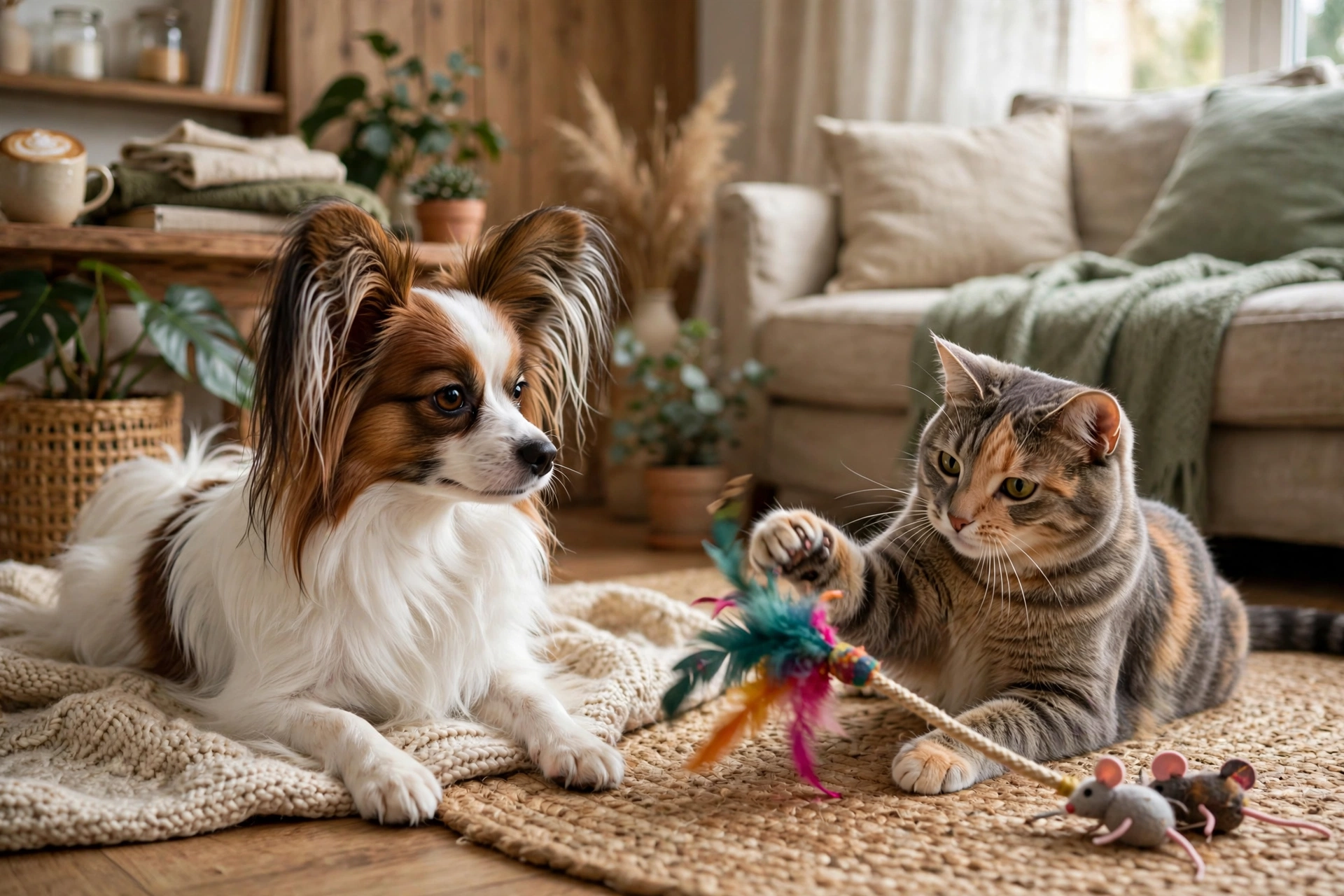
Probably not with intent to harm — but an excited young papillon may chase in play. Train a solid recall and “leave it,” and never let chasing become a game.
Should I get a kitten or an adult cat?
Either can work. Kittens adapt fastest; a calm adult cat that has lived with dogs before is the lowest-risk choice of all.
What if my cat hates dogs?
Respect it. Some cats never warm up, and that’s okay — peaceful coexistence (separate spaces, mutual ignoring) is a fine outcome. Don’t force friendship.
Can they share food and water bowls?
Water, fine. Food, no — feed separately. Cat food is too rich for dogs long-term, and mealtime is prime resource-guarding territory.
The Bottom Line: Do Papillons Get Along With Cats?
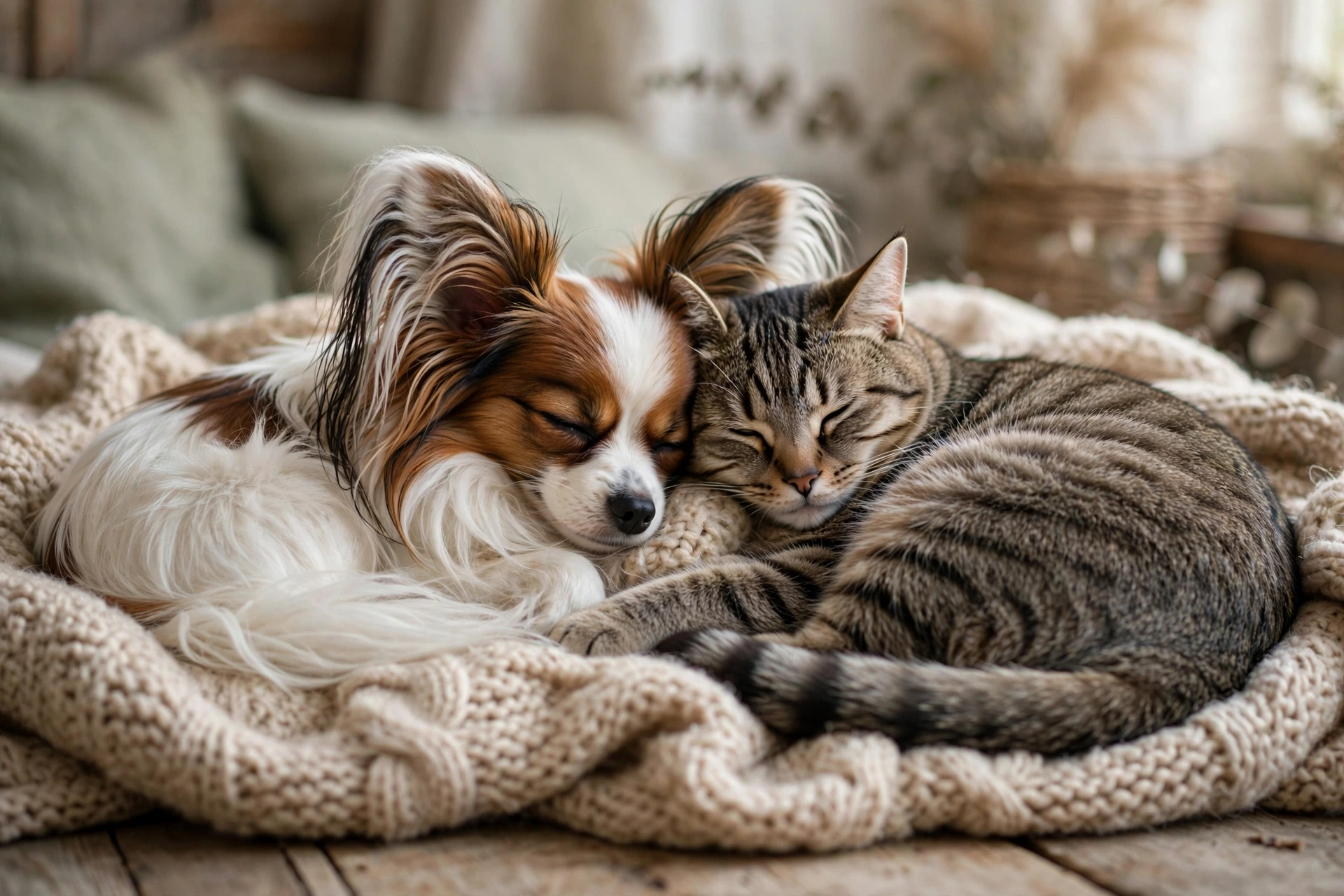
A papillon is one of the safest dog bets for a cat household: small, social, low prey drive, and highly trainable. Do the slow introduction properly, give the cat a sanctuary and an exit, and there’s an excellent chance you’ll end up with the classic photo — dog and cat napping in the same sunbeam. So do papillons get along with cats? In most homes, with a slow introduction, the answer is a happy yes.
Keep reading
If you’re still deciding whether this breed fits your household, read Are Papillon Dogs Good? for a fuller picture of the breed’s temperament.https://perkypapillon.com/papillon-dogs-good/
And before you commit, Papillon Dogs: What to Know Before Bringing One Home covers the practical side of preparing for a papillon.https://perkypapillon.com/papillon-dogs-what-know-before-bringing-one-home/
Thoughts from the Pack